
Grey Seal
About grey seal hunting
The grey seal is Norway's largest seal, and males can weigh over 300 kg. The hunt is conducted the same way as harbour seal hunting — from a boat toward seals resting on skerries.
The grey seal is more robust than the harbour seal and tolerates more disturbance before disappearing into the water. At the same time, it tends to haul out on more exposed skerries where boat access can be difficult.
Caliber and shot placement are the same as for harbour seal: a big-game rifle with a head shot. The grey seal is a large animal, and it's important to ensure the seal doesn't slide into the water after the shot.
Grey seal hunting is regulated by the Directorate of Fisheries with its own quota. The population is managed regionally. In some areas, the grey seal is considered a problem for fisheries and aquaculture, and quotas can be relatively generous.
Grey seal meat is darker and more robust in flavour than harbour seal meat. It is traditionally used in stews and can be smoked.
Hunting Season
2 Jan – 30 Apr and 1 Aug – 30 Sep
Quota-regulated. Managed by the Directorate of Fisheries. Seasons may vary between management areas.
Weight
Live weight: female 100–190 kg, male 170–310 kg.
Distribution
Along the coast from Rogaland to Finnmark, centred on Trøndelag, Nordland and Troms. Less common in the south.
Terrain
Exposed islets and skerries facing the open sea. The grey seal prefers more weather-beaten terrain than the harbour seal and may haul out where the swell is heavy.
Identification
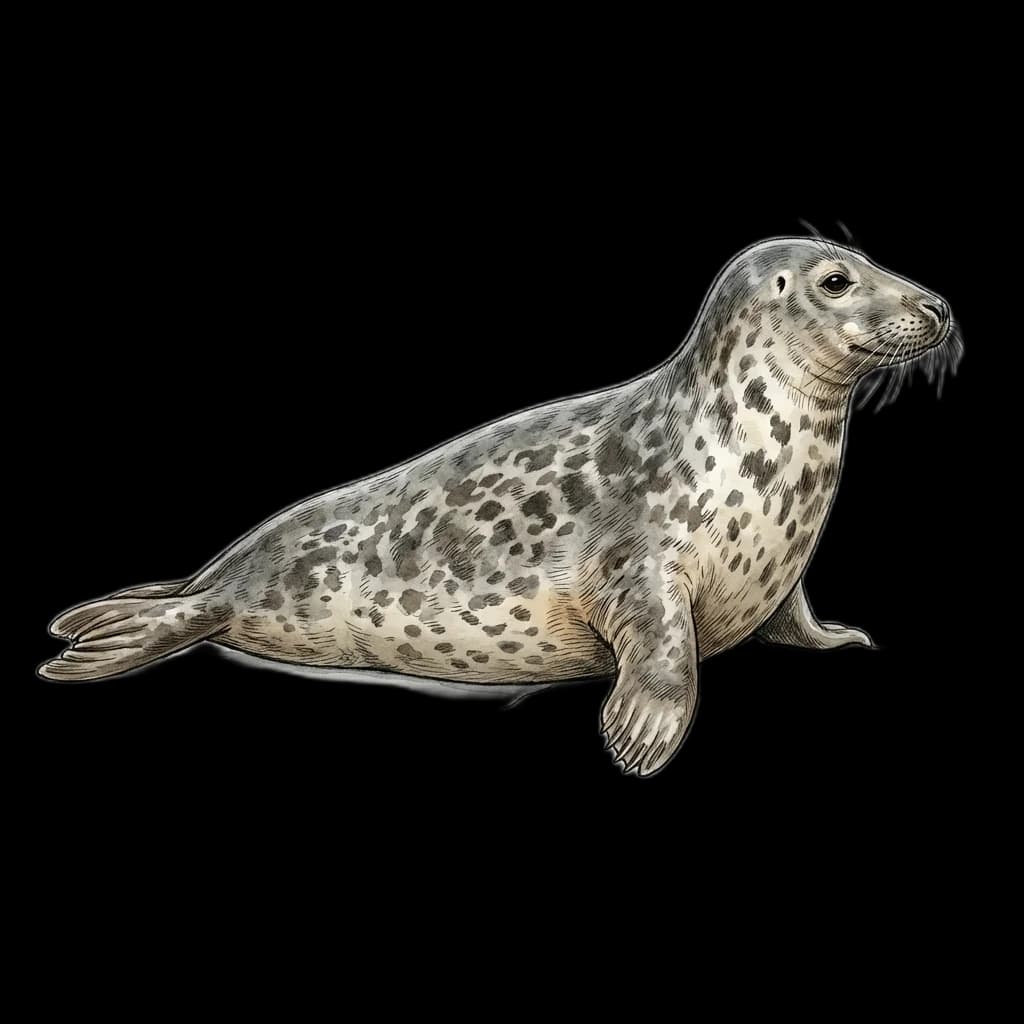
Grey-brown with light and dark blotches. Males are darker with a heavy neck. The long muzzle clearly distinguishes it from the harbour seal's rounded face.
Hunting Tips
Grey seals tend to haul out on the outermost skerries where the sea can be rough. Choose calm weather. The grey seal is less wary than the harbour seal, but the exposed terrain makes the hunt demanding.
Grey Seal hunting by county
Find grounds for grey seal hunting
Create a free account and find hunting grounds where you can hunt grey seal.
