Shotgun Chokes & Non-Toxic Shot
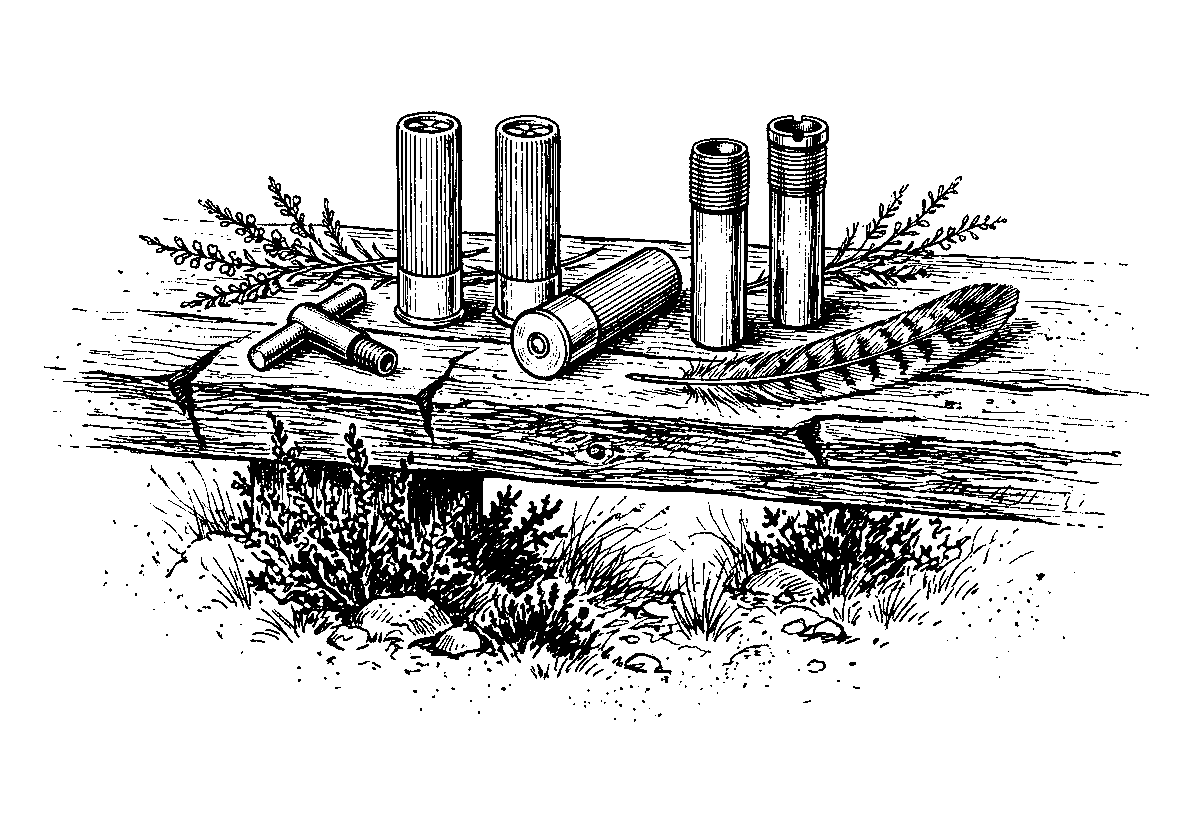
- All-round hunting setup
- Improved Cylinder (1/4) first barrel + Modified (1/2) second barrel
- Steel shot rule
- Avoid chokes tighter than 1/2 (Modified) with large steel (> 3.25 mm / US 4)
- Non-lead alternatives
- Steel (affordable), Bismuth (vintage-safe), Tungsten/TSS (max range)
- Ethical shotgun range
- Keep shots within 25–35 m (27–38 yd) for clean kills
On this page
Clean shotgunning relies on two variables working together: enough pellet density to strike vital organs reliably, and enough individual pellet energy to penetrate cleanly at hunting range. With wetland lead bans across Europe and North America—and total lead bans in countries like Denmark—mastering chokes and modern non-toxic shot is essential for every wingshooter.
Shotgun choke reference
| Choke name | Notches | Constriction (12 ga) | Best field uses |
|---|---|---|---|
| Cylinder | 5 notches (IIIII) | 0.00 mm (0.000 in) | Thick cover (woodcock, brush rabbits) at 10–20 m (11–22 yd) |
| Improved Cylinder (1/4) | 4 notches (IIII) | 0.25 mm (0.010 in) | First barrel for grouse, ptarmigan, pheasant & decoying duck |
| Modified (1/2) | 3 notches (III) | 0.50 mm (0.020 in) | All-round second barrel; practical tight limit for large steel |
| Improved Modified (3/4) | 2 notches (II) | 0.75 mm (0.030 in) | High birds with bismuth/tungsten/lead—skip large steel |
| Full | 1 notch (I) | 1.00 mm (0.040 in) | Stationary turkey/fox or specialist long birds (never large steel) |
Recommended non-lead shot sizes by game
| Quarry | Steel (mm / US #) | Bismuth / Lead (mm / US #) | Tungsten / TSS (mm / US #) | Practical max range |
|---|---|---|---|---|
| Ptarmigan, woodcock, pigeon | 2.75–3.25 mm (US 6–4) | 2.5–2.75 mm (US 7–6) | 2.0–2.25 mm (US 9–8) | 25–30 m (27–33 yd) |
| Grouse, pheasant, mallard | 3.0–3.5 mm (US 5–3) | 2.75–3.0 mm (US 6–5) | 2.25–2.5 mm (US 8–7) | 25–35 m (27–38 yd) |
| Capercaillie, mountain hare | 3.25–3.75 mm (US 4–2) | 3.0–3.25 mm (US 5–4) | 2.5–2.75 mm (US 7–6) | 25–30 m (27–33 yd) |
| Geese, red fox, roe deer (where legal) | 3.5–4.25 mm (US 3–BB) | 3.5–4.0 mm (US 3–1) | 2.75–3.25 mm (US 6–4) | 20–30 m (22–33 yd) |
Always pattern your gun on paper
Fire at least two test rounds per load at a 75 cm (30 in) paper circle from 25–30 m (27–33 yd). Different wads and chokes throw very different patterns; verify there are no empty gaps big enough for a bird to slip through and confirm point of impact aligns with your natural mount.
Read more in shotguns and shotgun hunting.
Related
Frequently asked questions
Which choke should I use with steel shot?
Steel pellets resist deformation and pattern tighter than lead through the same constriction—typically one choke step tighter. Pair Improved Cylinder (1/4) and Modified (1/2) for most field hunting, and verify your shotgun carries the fleur-de-lis steel-proof mark before shooting high-performance steel.
Why do I need larger shot sizes when switching from lead to steel?
Steel is roughly 30 % less dense than lead and sheds velocity faster downrange. Go up two shot sizes (roughly +0.5 mm diameter)—for example from US #6 lead to US #4 steel—to maintain penetrating pellet energy.
Can I shoot non-lead ammunition in an older double-barrelled shotgun?
Standard-pressure steel (≤ 3.25 mm / US #4) is generally safe only through open chokes (1/2 or wider) in sound guns, whereas high-pressure steel requires steel-proofed barrels. Bismuth shot mimics lead density and softness, making it the safest non-lead choice for vintage fixed-choke guns.
Plan your hunt with Hunta
Share live maps, stands, wind direction and quotas for free with your hunting team, or discover available hunting grounds in Norway.