Hunting Licences: Everything You Need to Know | Hunta
Hunting Licences: Everything You Need to Know
•6 min read
A surprising number of hunters mix up the hunter's fee and the hunting licence, or assume one covers the other. Here's how they actually work — and what you need before heading out.
Hunting Licences: Everything You Need to Know
A surprising number of hunters mix up the hunter's fee (jegeravgift) and the hunting licence (jaktkort), or assume that one covers the other. I've been asked about this more times than I can count, so here's my attempt to clear it up once and for all.
The Hunter's Fee and the Hunting Licence Are Two Different Things
Let's start with the basics.
The hunter's fee (jegeravgift) is a state levy you pay to the Norwegian Environment Agency (Miljødirektoratet) every year you want to hunt. For the 2024/2025 hunting year it costs 409 kroner. Without a paid hunter's fee you are not permitted to hunt in Norway — full stop. Payment is made through Jegerregisteret (jegerregisteret.no), and you receive a hunter's fee card as proof.
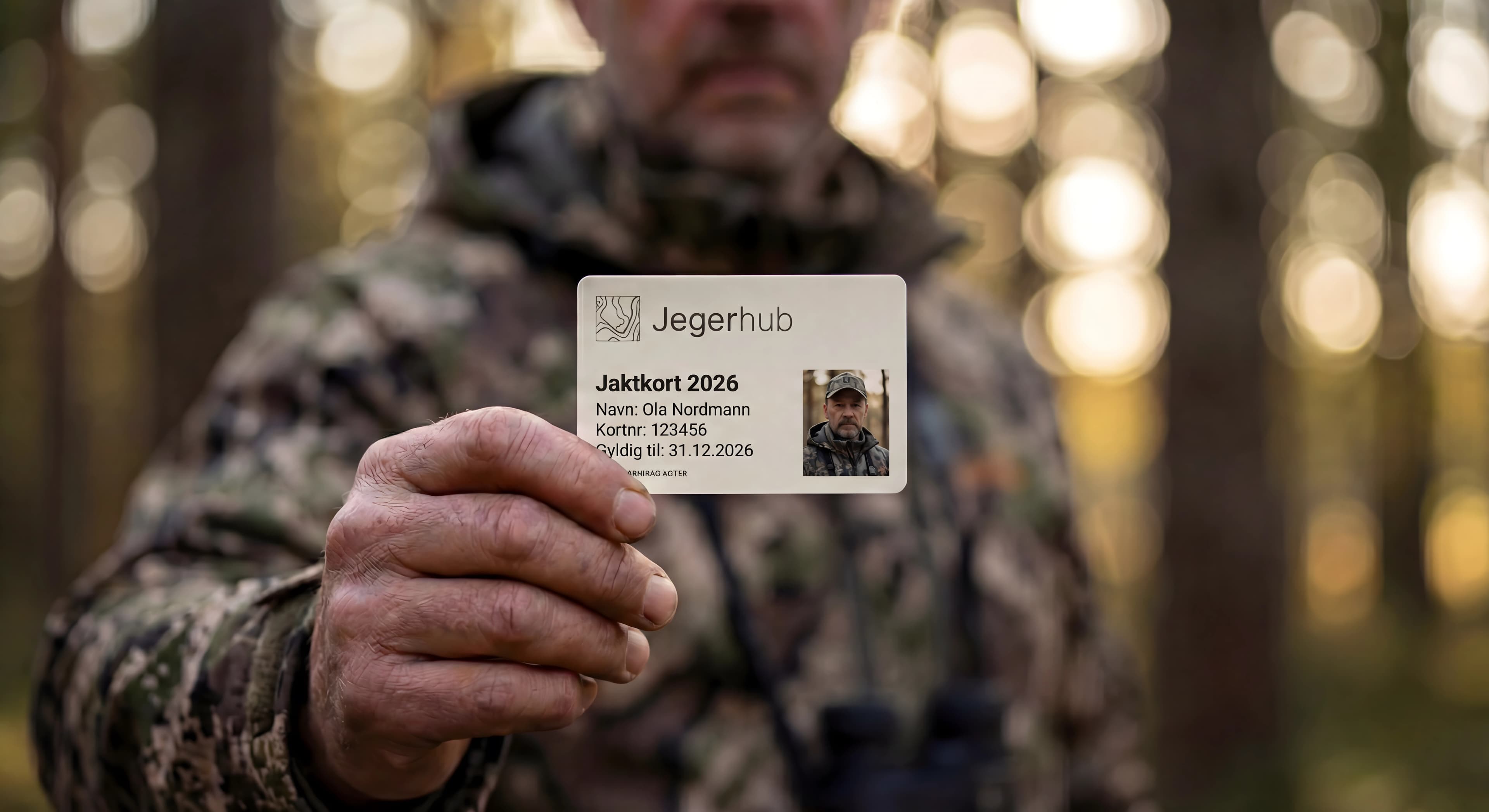
A hunting licence (jaktkort) is something different. A hunting licence gives you permission to hunt on a specific piece of land. It is the landowner (or whoever manages the land) who sells hunting licences. Without a hunting licence for the specific area you intend to hunt, you are not permitted to be there with a firearm — even if your hunter's fee is paid.
Think of it this way: the hunter's fee is your driver's licence. The hunting licence is the ticket to a particular venue.
Who Needs a Hunting Licence?
Anyone who is going to hunt on someone else's land. If you own the hunting ground yourself, you naturally don't need a hunting licence for your own property — but you still need to have paid the hunter's fee.
For large-game hunting (elk, red deer, wild reindeer, roe deer) separate rules apply, involving culling permits (fellingstillatelser) issued by the municipality. Here it is the hunting territory (vald) that holds the quota, and you must be part of the hunting party that has been allocated the culling right. A hunting licence alone does not entitle you to take large game.
For small-game hunting (ptarmigan, woodland game birds, hare, fox and the like) a hunting licence is all you need to get going. Pay your hunting licence and your hunter's fee, and you can head straight out.
Types of Hunting Licences
Hunting licences can look different depending on who sells them and which land they cover.
Day licences give you access to a piece of land for one day. Common for small-game hunting, and usually the cheapest option. Prices typically range from 100 to 500 kroner depending on the area.
Week licences give you access for one week. Popular among those travelling to a new area who want several days at their disposal. Prices vary from 500 to 2,000 kroner.
Season licences are valid for the entire hunting season, or a defined period within it. Worth it if you plan to hunt a lot in a particular area. Some landowners offer season licences for 2,000 to 5,000 kroner.
Hunting Licences: Everything You Need to Know
•6 min read
A surprising number of hunters mix up the hunter's fee and the hunting licence, or assume one covers the other. Here's how they actually work — and what you need before heading out.
Hunting Licences: Everything You Need to Know
A surprising number of hunters mix up the hunter's fee (jegeravgift) and the hunting licence (jaktkort), or assume that one covers the other. I've been asked about this more times than I can count, so here's my attempt to clear it up once and for all.
The Hunter's Fee and the Hunting Licence Are Two Different Things
Let's start with the basics.
The hunter's fee (jegeravgift) is a state levy you pay to the Norwegian Environment Agency (Miljødirektoratet) every year you want to hunt. For the 2024/2025 hunting year it costs 409 kroner. Without a paid hunter's fee you are not permitted to hunt in Norway — full stop. Payment is made through Jegerregisteret (jegerregisteret.no), and you receive a hunter's fee card as proof.
A hunting licence (jaktkort) is something different. A hunting licence gives you permission to hunt on a specific piece of land. It is the landowner (or whoever manages the land) who sells hunting licences. Without a hunting licence for the specific area you intend to hunt, you are not permitted to be there with a firearm — even if your hunter's fee is paid.
Think of it this way: the hunter's fee is your driver's licence. The hunting licence is the ticket to a particular venue.
Who Needs a Hunting Licence?
Anyone who is going to hunt on someone else's land. If you own the hunting ground yourself, you naturally don't need a hunting licence for your own property — but you still need to have paid the hunter's fee.
For large-game hunting (elk, red deer, wild reindeer, roe deer) separate rules apply, involving culling permits (fellingstillatelser) issued by the municipality. Here it is the hunting territory (vald) that holds the quota, and you must be part of the hunting party that has been allocated the culling right. A hunting licence alone does not entitle you to take large game.
For small-game hunting (ptarmigan, woodland game birds, hare, fox and the like) a hunting licence is all you need to get going. Pay your hunting licence and your hunter's fee, and you can head straight out.
Types of Hunting Licences
Hunting licences can look different depending on who sells them and which land they cover.
Day licences give you access to a piece of land for one day. Common for small-game hunting, and usually the cheapest option. Prices typically range from 100 to 500 kroner depending on the area.
Week licences give you access for one week. Popular among those travelling to a new area who want several days at their disposal. Prices vary from 500 to 2,000 kroner.
Season licences are valid for the entire hunting season, or a defined period within it. Worth it if you plan to hunt a lot in a particular area. Some landowners offer season licences for 2,000 to 5,000 kroner.
Licences with restrictions. Many hunting licences come with restrictions on the number of birds you may take per day (a daily bag limit), which species you may hunt, or how many hunters can be in the area at the same time. Always read the terms and conditions.
Where Do You Buy a Hunting Licence?
There are several options:
Directly from the landowner. Many landowners sell hunting licences themselves, either via their own website, by phone, or in person. This is still common in rural areas.
Fjellstyrer (mountain boards). The roughly 95 fjellstyrer in Norway sell hunting licences for the statsallmenning (state commons). There are often fixed opening dates for licence sales, and popular areas can sell out quickly. Keep an eye on the website of the fjellstyre for the area you're interested in.
Statskog. For state-owned land outside the statsallmenning, Statskog sells hunting licences through its own channels.
Digital platforms. On Hunta you can find and buy hunting licences for private land across the country. You can see what's available, what it costs, and book immediately. It saves time and makes planning your hunt much easier.
What Does a Hunting Licence Actually Cost?
That's a question with no simple answer. Prices vary enormously, and here are some examples:
Small-game hunting on state land (Statskog): day licences from around 100 to 250 kroner; week licences from 400 to 800 kroner.
Small-game hunting on private land: anything from 200 to 1,500 kroner per day, depending on the terrain, location, and game population.
Ptarmigan hunting in popular mountain areas: season licences can cost 3,000 to 5,000 kroner, and they often sell out long before the season opens.
Roe deer hunting: hunting licences with a culling quota can run from 1,500 to 5,000 kroner per season.
It pays to compare. Check available hunting licences on Hunta to get an overview of what's on offer in your area.
Shooting Test and Other Requirements
For large-game hunting you must have passed the shooting test (skyteprøve) for the current hunting year. The test is taken at approved ranges and usually costs 100 to 200 kroner. Without a valid shooting test you cannot participate in large-game hunting, even if you hold a hunting licence and have paid the hunter's fee.
For small-game hunting there is no shooting test, but you must have passed the hunter's examination (jegerprøven). The jegerprøven is a course of at least 30 hours with a final exam. Once you have passed, you are registered in Jegerregisteret for life.
Common Mistakes
I keep seeing the same errors crop up among hunters, especially those who are relatively new to it:
Forgetting to pay the hunter's fee. It must be paid every year, and you cannot hunt without it. Set a reminder in your calendar.
Buying a hunting licence for the wrong area. Make sure the licence actually covers the area you intend to hunt. Boundary lines are not always intuitive, and it is your responsibility to stay within them.
Assuming the hunting licence includes your dog. Many areas have their own rules about using dogs. Some do not allow it at all; others require the dog to be certified, or that you hold a special add-on permit.
Booking too late. Popular areas go fast. I've seen ptarmigan-hunting ground in Finnmark sell out within hours of licences going on sale. Get in early.
Digital Hunting Licences
Paper hunting licences are still in use, but the trend is clear: more and more landowners and land managers are moving to digital solutions. Through Hunta you receive your hunting licence digitally, which means it's always available on your phone. You don't have to remember any paperwork, and the landowner can keep track of who is in the area at any given time.
For landowners, digital hunting licences mean less administration and better oversight. For hunters, it means easier access and faster booking. Everyone benefits.
In Summary
You need two things to hunt legally in Norway: a paid hunter's fee and a hunting licence for the land you intend to hunt on. For large game you additionally need a culling permit and a valid shooting test.
Check available hunting licences on Hunta, pay your hunter's fee on time, and familiarise yourself with the rules for the specific area. Then you're ready to go.
Licences with restrictions. Many hunting licences come with restrictions on the number of birds you may take per day (a daily bag limit), which species you may hunt, or how many hunters can be in the area at the same time. Always read the terms and conditions.
Where Do You Buy a Hunting Licence?
There are several options:
Directly from the landowner. Many landowners sell hunting licences themselves, either via their own website, by phone, or in person. This is still common in rural areas.
Fjellstyrer (mountain boards). The roughly 95 fjellstyrer in Norway sell hunting licences for the statsallmenning (state commons). There are often fixed opening dates for licence sales, and popular areas can sell out quickly. Keep an eye on the website of the fjellstyre for the area you're interested in.
Statskog. For state-owned land outside the statsallmenning, Statskog sells hunting licences through its own channels.
Digital platforms. On Hunta you can find and buy hunting licences for private land across the country. You can see what's available, what it costs, and book immediately. It saves time and makes planning your hunt much easier.
What Does a Hunting Licence Actually Cost?
That's a question with no simple answer. Prices vary enormously, and here are some examples:
Small-game hunting on state land (Statskog): day licences from around 100 to 250 kroner; week licences from 400 to 800 kroner.
Small-game hunting on private land: anything from 200 to 1,500 kroner per day, depending on the terrain, location, and game population.
Ptarmigan hunting in popular mountain areas: season licences can cost 3,000 to 5,000 kroner, and they often sell out long before the season opens.
Roe deer hunting: hunting licences with a culling quota can run from 1,500 to 5,000 kroner per season.
It pays to compare. Check available hunting licences on Hunta to get an overview of what's on offer in your area.
Shooting Test and Other Requirements
For large-game hunting you must have passed the shooting test (skyteprøve) for the current hunting year. The test is taken at approved ranges and usually costs 100 to 200 kroner. Without a valid shooting test you cannot participate in large-game hunting, even if you hold a hunting licence and have paid the hunter's fee.
For small-game hunting there is no shooting test, but you must have passed the hunter's examination (jegerprøven). The jegerprøven is a course of at least 30 hours with a final exam. Once you have passed, you are registered in Jegerregisteret for life.
Common Mistakes
I keep seeing the same errors crop up among hunters, especially those who are relatively new to it:
Forgetting to pay the hunter's fee. It must be paid every year, and you cannot hunt without it. Set a reminder in your calendar.
Buying a hunting licence for the wrong area. Make sure the licence actually covers the area you intend to hunt. Boundary lines are not always intuitive, and it is your responsibility to stay within them.
Assuming the hunting licence includes your dog. Many areas have their own rules about using dogs. Some do not allow it at all; others require the dog to be certified, or that you hold a special add-on permit.
Booking too late. Popular areas go fast. I've seen ptarmigan-hunting ground in Finnmark sell out within hours of licences going on sale. Get in early.
Digital Hunting Licences
Paper hunting licences are still in use, but the trend is clear: more and more landowners and land managers are moving to digital solutions. Through Hunta you receive your hunting licence digitally, which means it's always available on your phone. You don't have to remember any paperwork, and the landowner can keep track of who is in the area at any given time.
For landowners, digital hunting licences mean less administration and better oversight. For hunters, it means easier access and faster booking. Everyone benefits.
In Summary
You need two things to hunt legally in Norway: a paid hunter's fee and a hunting licence for the land you intend to hunt on. For large game you additionally need a culling permit and a valid shooting test.
Check available hunting licences on Hunta, pay your hunter's fee on time, and familiarise yourself with the rules for the specific area. Then you're ready to go.