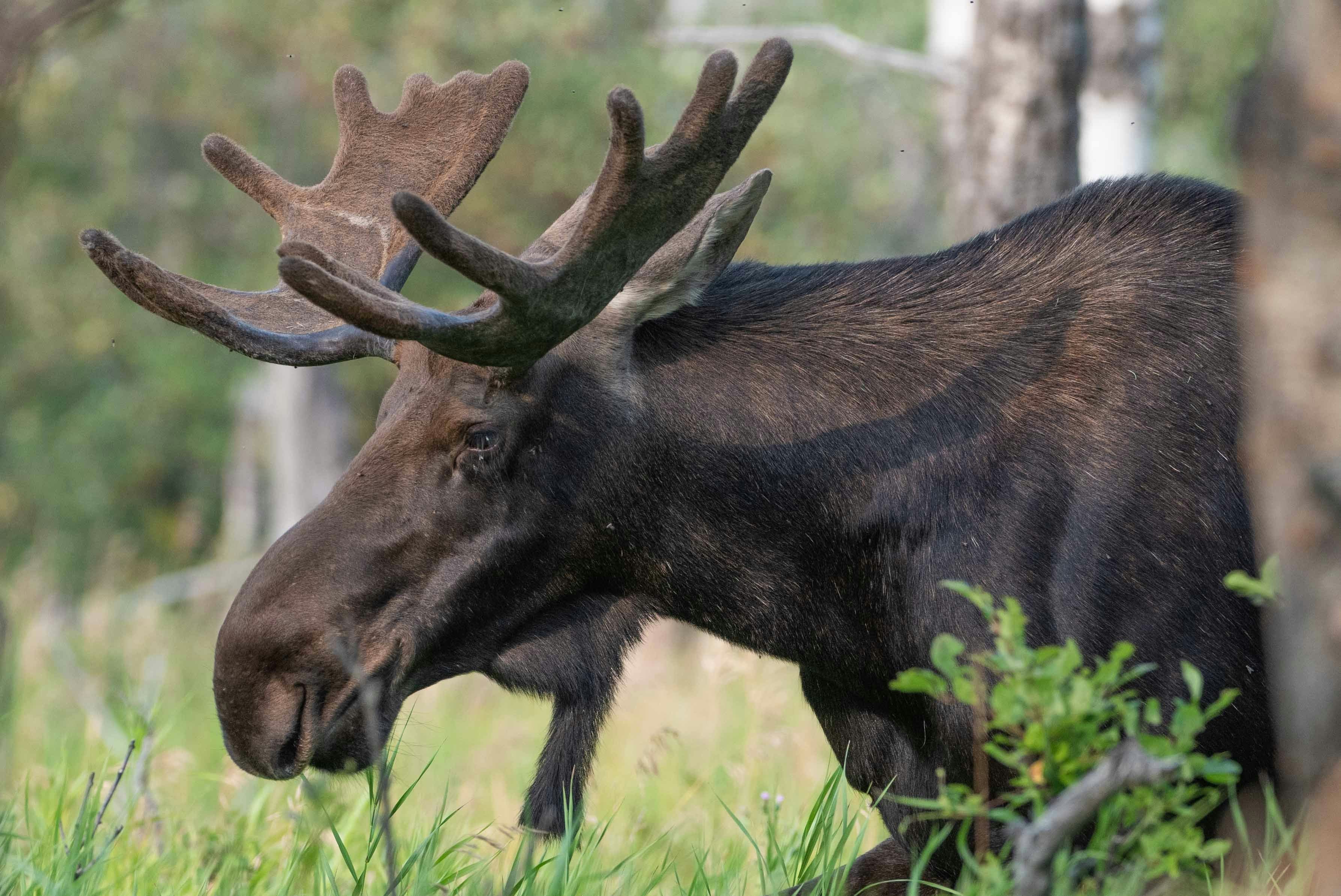
Moose hunting is one of the most intense experiences you can have as a hunter in Norway — long days, early mornings, and a lot of waiting, but the feeling when everything comes together is hard to put into words.
The Complete Guide to Moose Hunting in Norway
Moose hunting is one of the most intense experiences you can have as a hunter in Norway. There are long days, early mornings, and a lot of waiting, but the feeling when everything comes together is hard to put into words for anyone who hasn't been there. Every year around 26,000 moose are harvested in Norway, according to Statistics Norway (SSB), and the hunt involves thousands of hunters across the country.
This guide is for anyone who wants to understand what moose hunting actually involves, whether you're a beginner considering joining a hunting party for the first time, or an experienced hunter looking to brush up on the fundamentals.
Season and Hunting Dates
Moose season in Norway opens on 25 September and runs through 23 December in most areas. In Troms og Nordland it opens as early as 1 September, while certain municipalities in Hordaland and Rogaland operate with shorter seasons. Each municipality sets the exact dates within the framework established by Miljødirektoratet (the Norwegian Environment Agency).
In practice, the first few weeks are the most active. Most hunting parties concentrate their effort from late September through mid-October. Things slow down after that, even though the season formally continues into late autumn.
Quota System and Allocation
Moose hunting in Norway is quota-based. That means you cannot simply go out and shoot a moose freely. The municipality allocates quotas to approved vald (hunting districts), which in turn distribute individual harvest permits to hunting areas.
A vald is a geographic unit that meets the minimum area requirements. In most municipalities the minimum area for moose is between 3,000 and 20,000 dekar, depending on local moose density. Districts that are too small cannot receive their own quota and may need to cooperate with neighbouring properties.
The harvest permit typically specifies which animals may be taken: calf, cow, bull, or any animal. The hunting party is responsible for staying within the quota, and the hunt leader (jaktleder) holds formal responsibility.
Hunting Methods
There are several ways to hunt moose, and the method often depends on terrain and local tradition.
Stand hunting (posteringsjakt) is the most common approach. Hunters position themselves at fixed stands along likely travel corridors while drivers — and sometimes dogs — push the moose in the right direction. This method requires thorough planning and clear communication within the hunting party.
Stalking (smygjakt) is more of a solo pursuit. You move quietly through the terrain, reading tracks and trying to close the distance for a shot. It demands patience and an intimate knowledge of the ground. Stalking is most common early in the season, before snow arrives.
The Complete Guide to Moose Hunting in Norway
•7 min read
Moose hunting is one of the most intense experiences you can have as a hunter in Norway — long days, early mornings, and a lot of waiting, but the feeling when everything comes together is hard to put into words.
The Complete Guide to Moose Hunting in Norway
Moose hunting is one of the most intense experiences you can have as a hunter in Norway. There are long days, early mornings, and a lot of waiting, but the feeling when everything comes together is hard to put into words for anyone who hasn't been there. Every year around 26,000 moose are harvested in Norway, according to Statistics Norway (SSB), and the hunt involves thousands of hunters across the country.
This guide is for anyone who wants to understand what moose hunting actually involves, whether you're a beginner considering joining a hunting party for the first time, or an experienced hunter looking to brush up on the fundamentals.
Season and Hunting Dates
Moose season in Norway opens on 25 September and runs through 23 December in most areas. In Troms og Nordland it opens as early as 1 September, while certain municipalities in Hordaland and Rogaland operate with shorter seasons. Each municipality sets the exact dates within the framework established by Miljødirektoratet (the Norwegian Environment Agency).
In practice, the first few weeks are the most active. Most hunting parties concentrate their effort from late September through mid-October. Things slow down after that, even though the season formally continues into late autumn.
Quota System and Allocation
Moose hunting in Norway is quota-based. That means you cannot simply go out and shoot a moose freely. The municipality allocates quotas to approved vald (hunting districts), which in turn distribute individual harvest permits to hunting areas.
A vald is a geographic unit that meets the minimum area requirements. In most municipalities the minimum area for moose is between 3,000 and 20,000 dekar, depending on local moose density. Districts that are too small cannot receive their own quota and may need to cooperate with neighbouring properties.
The harvest permit typically specifies which animals may be taken: calf, cow, bull, or any animal. The hunting party is responsible for staying within the quota, and the hunt leader (jaktleder) holds formal responsibility.
Hunting Methods
There are several ways to hunt moose, and the method often depends on terrain and local tradition.
Stand hunting (posteringsjakt) is the most common approach. Hunters position themselves at fixed stands along likely travel corridors while drivers — and sometimes dogs — push the moose in the right direction. This method requires thorough planning and clear communication within the hunting party.
Stalking (smygjakt) is more of a solo pursuit. You move quietly through the terrain, reading tracks and trying to close the distance for a shot. It demands patience and an intimate knowledge of the ground. Stalking is most common early in the season, before snow arrives.
Hunting with a loose-hunting dog (løshund) is widespread in many parts of the country. The dog tracks the moose and bays at it, holding it in place while the hunter moves in for the shot. This method places high demands on the dog and requires the hunter to cover ground quickly.
Equipment and Firearms
In Norway, a rifle is the only legal firearm for moose hunting. The requirement is that the rifle fires ammunition with a muzzle energy of at least 2,200 joules at 100 metres (E100). This covers calibres such as .308 Winchester, .30-06 Springfield, and 6.5×55 Swedish Mauser, all of which are popular choices among Norwegian moose hunters.
A riflescope is standard. Most hunters use a variable-power scope, typically in the 1.5–6× or 2–8× range, which provides good situational awareness at close range and enough magnification for longer shots.
Beyond the rifle, you will need:
Layered clothing, ideally in wool. Weather in September and October can swing from mild rain to frost and snow — sometimes on the same day. A seat pad and thermos are essentials for long hours on stand.
A knife and field-dressing kit. Once the animal is down it must be field-dressed on the spot. A good hunting knife, disposable gloves, and some cord are the minimum. Many hunting parties also bring a game sled or drag bag for hauling the animal out of the terrain.
Communications gear. VHF hunting radios are standard in most hunting parties. Mobile coverage is unreliable in many hunting areas, and reliable communication between stands and drivers is critical for safety.
Rules and Safety
Safety on the moose hunt is something you can never take lightly. Accidents happen every year, and most could have been prevented with better routines.
All hunters are required to have passed the large-game shooting test (skyteprøve for storvilt) in the same calendar year as the hunt. The test is conducted at an approved range and tests your ability to hit a vital zone at 100 metres. The requirement is five hits within a circle representing the heart and lungs.
The hunt leader is responsible for ensuring the hunt is conducted safely. That means clear communication about safe shooting directions, stand placement, and the rules for when to shoot. Many hunting parties hold a safety briefing before the first day of hunting.
High-visibility clothing is strongly recommended, even if it is not legally required in all situations. An orange hat or vest makes you visible to other hunters in the terrain.
Harvest Reporting
Once a moose has been taken, it must be reported. The hunting party is required to notify the municipality within a short time, and there are specific requirements for what must be reported: sex, estimated age, live weight, and the location of the harvest.
The municipality uses this information to manage the local moose population. Accurate reporting is the foundation that makes the quota system work. Sett og skutt (seen-and-shot) forms are also part of the reporting process, where the hunting party registers all moose observations made during the hunt — not just the animals harvested.
Joining a Hunting Party
For many newcomers, the hardest part of moose hunting is finding a hunting party to join. Parties are often full, and vacancies rarely open up. Here are a few tips:
Get involved locally. Join the local hunters' and anglers' association (jeger- og fiskerforeningen). Show up at the shooting range. Demonstrate that you are interested and reliable. Many parties recruit from people they know and have seen over time.
Start as a driver or dog handler. In many parties it is easier to get a role there than as a stand hunter right away. It gives you the chance to learn the terrain, get to know the people, and show that you take the hunt seriously.
Look for available moose hunting grounds on Hunta. Some landowners offer moose hunting without requiring you to be part of a permanent party. It can be a good way to gain experience and perhaps build the contacts that lead to something more permanent.
The Best Moose Counties
Innlandet is by far Norway's largest moose county. Østerdalen and Gudbrandsdalen account for an enormous share of the national harvest. Trøndelag follows closely behind, with strong traditions in Namdal and Snåsa. For a full overview of all hunting seasons and dates, see the knowledge centre.
After the Hunt
Moose hunting is about far more than the shot itself. Much of the work comes afterward: field dressing, butchering, cooling, and dividing the meat. A mature moose yields between 150 and 250 kilograms of venison — that is a lot of food. Most hunting parties have established routines for how the meat is shared among participants.
Take care of the camaraderie. The evenings after the hunt, the meals, the stories. For many, that is the part that matters most.
Hunting with a loose-hunting dog (løshund) is widespread in many parts of the country. The dog tracks the moose and bays at it, holding it in place while the hunter moves in for the shot. This method places high demands on the dog and requires the hunter to cover ground quickly.
Equipment and Firearms
In Norway, a rifle is the only legal firearm for moose hunting. The requirement is that the rifle fires ammunition with a muzzle energy of at least 2,200 joules at 100 metres (E100). This covers calibres such as .308 Winchester, .30-06 Springfield, and 6.5×55 Swedish Mauser, all of which are popular choices among Norwegian moose hunters.
A riflescope is standard. Most hunters use a variable-power scope, typically in the 1.5–6× or 2–8× range, which provides good situational awareness at close range and enough magnification for longer shots.
Beyond the rifle, you will need:
Layered clothing, ideally in wool. Weather in September and October can swing from mild rain to frost and snow — sometimes on the same day. A seat pad and thermos are essentials for long hours on stand.
A knife and field-dressing kit. Once the animal is down it must be field-dressed on the spot. A good hunting knife, disposable gloves, and some cord are the minimum. Many hunting parties also bring a game sled or drag bag for hauling the animal out of the terrain.
Communications gear. VHF hunting radios are standard in most hunting parties. Mobile coverage is unreliable in many hunting areas, and reliable communication between stands and drivers is critical for safety.
Rules and Safety
Safety on the moose hunt is something you can never take lightly. Accidents happen every year, and most could have been prevented with better routines.
All hunters are required to have passed the large-game shooting test (skyteprøve for storvilt) in the same calendar year as the hunt. The test is conducted at an approved range and tests your ability to hit a vital zone at 100 metres. The requirement is five hits within a circle representing the heart and lungs.
The hunt leader is responsible for ensuring the hunt is conducted safely. That means clear communication about safe shooting directions, stand placement, and the rules for when to shoot. Many hunting parties hold a safety briefing before the first day of hunting.
High-visibility clothing is strongly recommended, even if it is not legally required in all situations. An orange hat or vest makes you visible to other hunters in the terrain.
Harvest Reporting
Once a moose has been taken, it must be reported. The hunting party is required to notify the municipality within a short time, and there are specific requirements for what must be reported: sex, estimated age, live weight, and the location of the harvest.
The municipality uses this information to manage the local moose population. Accurate reporting is the foundation that makes the quota system work. Sett og skutt (seen-and-shot) forms are also part of the reporting process, where the hunting party registers all moose observations made during the hunt — not just the animals harvested.
Joining a Hunting Party
For many newcomers, the hardest part of moose hunting is finding a hunting party to join. Parties are often full, and vacancies rarely open up. Here are a few tips:
Get involved locally. Join the local hunters' and anglers' association (jeger- og fiskerforeningen). Show up at the shooting range. Demonstrate that you are interested and reliable. Many parties recruit from people they know and have seen over time.
Start as a driver or dog handler. In many parties it is easier to get a role there than as a stand hunter right away. It gives you the chance to learn the terrain, get to know the people, and show that you take the hunt seriously.
Look for available moose hunting grounds on Hunta. Some landowners offer moose hunting without requiring you to be part of a permanent party. It can be a good way to gain experience and perhaps build the contacts that lead to something more permanent.
The Best Moose Counties
Innlandet is by far Norway's largest moose county. Østerdalen and Gudbrandsdalen account for an enormous share of the national harvest. Trøndelag follows closely behind, with strong traditions in Namdal and Snåsa. For a full overview of all hunting seasons and dates, see the knowledge centre.
After the Hunt
Moose hunting is about far more than the shot itself. Much of the work comes afterward: field dressing, butchering, cooling, and dividing the meat. A mature moose yields between 150 and 250 kilograms of venison — that is a lot of food. Most hunting parties have established routines for how the meat is shared among participants.
Take care of the camaraderie. The evenings after the hunt, the meals, the stories. For many, that is the part that matters most.
The Complete Guide to Moose Hunting in Norway | Hunta