Hunting Technology: Thermal Optics, Drones, and What Comes Next
•6 min read
Thermal scopes and drones are reshaping the hunt. The Viltseminaret on Voss takes on the debate around technology, ethics, and the future of hunting.
Hunting Technology: Thermal Optics, Drones, and What Comes Next
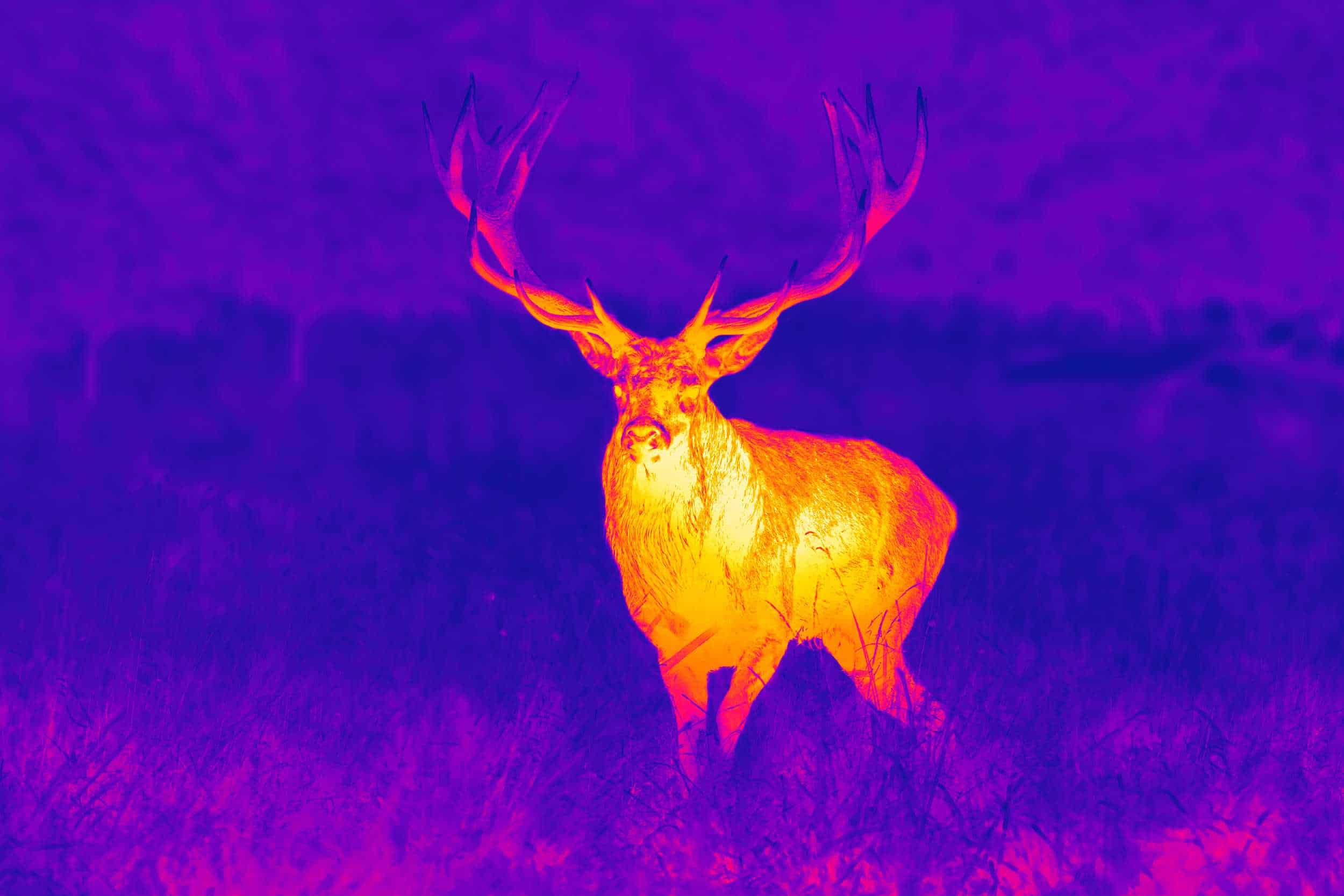
Thermal scopes are on their way to becoming as commonplace as GPS was fifteen years ago. Drones equipped with heat cameras are already being used for tracking wounded game in several parts of the country. And at the Viltseminaret (Wildlife Seminar) on Voss, 6–7 February, the experts are tackling the big question head-on: Is hunting becoming a sport only for tech enthusiasts?
It deserves a proper discussion.
Thermal Optics — From Niche to Mainstream
Just five years ago, thermal scopes and sights were the exclusive domain of the military and a handful of enthusiasts with deep pockets. Now you can pick up a usable thermal monocular for under 10,000 kroner, and sales have exploded.
In Norway, thermal optics are legal to use while hunting. A thorough legal assessment commissioned by an industry group (Blaser, Zeiss, Swarovski and others) concluded that thermal binoculars and sights do not fall under the ban on "artificial light" in section 20 of the Wildlife Act (viltloven), and are therefore permitted under current law. Many Norwegian hunters already make active use of thermal sights, and for tracking wounded deer-family animals (hjortevilt), their use is explicitly allowed.
Elsewhere in Europe, practice varies. In Germany, thermal sights are permitted for wild boar hunting at night. France allows them in certain circumstances. Sweden has recently opened up thermal sights for specific hunting methods. Norway is therefore among the countries with the broadest permission.
The debate is no longer about legality — it is about how we use the tools. And that is the more important conversation.
Drones and Tracking — Real Potential
Ingmar Slettmark, wildlife manager at Voss, has hands-on experience using drones fitted with thermal cameras to track injured game. The results are promising. A drone can cover vast areas in a short time, and the heat camera makes it possible to locate animals in dense vegetation and in the dark.
For tracking, the advantages are clear. A wounded animal that has bedded down in thick scrub can be virtually impossible to find by eye. With a thermal drone you can locate the animal in minutes rather than hours. That means less suffering for the game and more efficient work for the tracking team.
But there are limitations. Drones perform poorly in strong winds and heavy rain. Battery life is limited. Dense conifer forest can mask a heat signature. And crucially: a drone can find an animal, but it cannot follow a blood trail through the terrain the way a dog can.
Can a Drone Replace the Dog?
Short answer: no. Slightly longer answer: it does not need to, either.
A tracking dog follows blood and body fluids through terrain where no technology can match a good dog's nose. The dog works methodically along the trail, and an experienced handler reads the ground as they go. It is a skill built over generations.
Hunting Technology: Thermal Optics, Drones, and What Comes Next
•6 min read
Thermal scopes and drones are reshaping the hunt. The Viltseminaret on Voss takes on the debate around technology, ethics, and the future of hunting.
Hunting Technology: Thermal Optics, Drones, and What Comes Next
Thermal scopes are on their way to becoming as commonplace as GPS was fifteen years ago. Drones equipped with heat cameras are already being used for tracking wounded game in several parts of the country. And at the Viltseminaret (Wildlife Seminar) on Voss, 6–7 February, the experts are tackling the big question head-on: Is hunting becoming a sport only for tech enthusiasts?
It deserves a proper discussion.
Thermal Optics — From Niche to Mainstream
Just five years ago, thermal scopes and sights were the exclusive domain of the military and a handful of enthusiasts with deep pockets. Now you can pick up a usable thermal monocular for under 10,000 kroner, and sales have exploded.
In Norway, thermal optics are legal to use while hunting. A thorough legal assessment commissioned by an industry group (Blaser, Zeiss, Swarovski and others) concluded that thermal binoculars and sights do not fall under the ban on "artificial light" in section 20 of the Wildlife Act (viltloven), and are therefore permitted under current law. Many Norwegian hunters already make active use of thermal sights, and for tracking wounded deer-family animals (hjortevilt), their use is explicitly allowed.
Elsewhere in Europe, practice varies. In Germany, thermal sights are permitted for wild boar hunting at night. France allows them in certain circumstances. Sweden has recently opened up thermal sights for specific hunting methods. Norway is therefore among the countries with the broadest permission.
The debate is no longer about legality — it is about how we use the tools. And that is the more important conversation.
Drones and Tracking — Real Potential
Ingmar Slettmark, wildlife manager at Voss, has hands-on experience using drones fitted with thermal cameras to track injured game. The results are promising. A drone can cover vast areas in a short time, and the heat camera makes it possible to locate animals in dense vegetation and in the dark.
For tracking, the advantages are clear. A wounded animal that has bedded down in thick scrub can be virtually impossible to find by eye. With a thermal drone you can locate the animal in minutes rather than hours. That means less suffering for the game and more efficient work for the tracking team.
But there are limitations. Drones perform poorly in strong winds and heavy rain. Battery life is limited. Dense conifer forest can mask a heat signature. And crucially: a drone can find an animal, but it cannot follow a blood trail through the terrain the way a dog can.
Can a Drone Replace the Dog?
Short answer: no. Slightly longer answer: it does not need to, either.
A tracking dog follows blood and body fluids through terrain where no technology can match a good dog's nose. The dog works methodically along the trail, and an experienced handler reads the ground as they go. It is a skill built over generations.
But a drone fitted with a thermal camera can be a valuable supplement. Picture the situation where a wounded animal has crossed a river or disappeared into confused terrain. The dog loses the scent. Then the drone can search a large area and potentially locate the animal directly.
In practice it is not an either-or choice. The best tracking operations in the future will likely combine dog and technology. Slettmark will present his findings at Voss, and it will be worth hearing the concrete numbers and case studies.
What Does the Research Say?
Oddgeir Andersen from NINA (Norwegian Institute for Nature Research) will present results from a survey on thermal aids and technology-based hunting at the seminar. We do not yet know the details, but the survey appears to map attitudes and usage patterns among Norwegian hunters.
What we do know from earlier NINA research is that Norwegian hunters are generally positive toward technology that improves animal welfare and safety, but more sceptical of equipment that gives a perceived "unfair advantage" over the game. That is an important distinction. Most hunters draw a line between technology that helps you do the job better and technology that does the job for you.
The Ethics Debate No One Can Avoid
Here is the heart of the discussion: where is the line between a legitimate aid and something that undermines the hunting experience itself?
Those in favour point to animal welfare. Thermal optics let you see the game more clearly, which can lead to more precise shots and fewer woundings. Drones make tracking more efficient. Better technology means better hunting.
The sceptics worry that hunting loses something essential. Hunting ethics rest on the idea that the game should have a real chance — fair chase. If you can see everything that moves in the dark, and a drone can find any animal in the terrain, what remains of the challenge? Of the relationship between hunter and nature?
Both sides have a point. The answer probably lies somewhere in between. The binocular was once controversial too. So was the rifle scope. Technology changes, and with it the norms of what is acceptable.
Does Technology Make Hunting More Accessible?
One angle that often gets drowned out in the ethics debate is accessibility. Norwegian hunting is struggling with recruitment. The average age of hunters is rising, and many young people find the barrier to entry high.
Technology can lower that barrier. A beginner with a thermal scope spots game faster and learns to read the terrain with an extra tool at hand. GPS and mapping apps make navigation easier. Communication tools provide peace of mind.
At the same time, costs can push in the opposite direction. If hunting demands ever more expensive technology just to "keep up," it can exclude rather than include.
Tradition Meets Innovation
Hunting has always evolved. From muzzle-loaders to semi-automatic rifles, from compass to GPS. Every new technology has met resistance, and every time hunters have found a balance between the new and the traditional.
Thermal optics and drones are the next chapter. The Viltseminaret on Voss will be an important forum for discussing how we as hunters want to relate to the tools that are coming — not whether to use them, but how.
For the game, animal welfare is what counts. If you want to read more about hunting regulations and wildlife management, visit the knowledge centre. Used correctly, technology can actually make a difference there.
The Viltseminaret on Voss is held 6–7 February 2026. The programme includes, among others, Oddgeir Andersen (NINA) on technology-based hunting and Ingmar Slettmark (wildlife manager, Voss) on drones in tracking operations.
But a drone fitted with a thermal camera can be a valuable supplement. Picture the situation where a wounded animal has crossed a river or disappeared into confused terrain. The dog loses the scent. Then the drone can search a large area and potentially locate the animal directly.
In practice it is not an either-or choice. The best tracking operations in the future will likely combine dog and technology. Slettmark will present his findings at Voss, and it will be worth hearing the concrete numbers and case studies.
What Does the Research Say?
Oddgeir Andersen from NINA (Norwegian Institute for Nature Research) will present results from a survey on thermal aids and technology-based hunting at the seminar. We do not yet know the details, but the survey appears to map attitudes and usage patterns among Norwegian hunters.
What we do know from earlier NINA research is that Norwegian hunters are generally positive toward technology that improves animal welfare and safety, but more sceptical of equipment that gives a perceived "unfair advantage" over the game. That is an important distinction. Most hunters draw a line between technology that helps you do the job better and technology that does the job for you.
The Ethics Debate No One Can Avoid
Here is the heart of the discussion: where is the line between a legitimate aid and something that undermines the hunting experience itself?
Those in favour point to animal welfare. Thermal optics let you see the game more clearly, which can lead to more precise shots and fewer woundings. Drones make tracking more efficient. Better technology means better hunting.
The sceptics worry that hunting loses something essential. Hunting ethics rest on the idea that the game should have a real chance — fair chase. If you can see everything that moves in the dark, and a drone can find any animal in the terrain, what remains of the challenge? Of the relationship between hunter and nature?
Both sides have a point. The answer probably lies somewhere in between. The binocular was once controversial too. So was the rifle scope. Technology changes, and with it the norms of what is acceptable.
Does Technology Make Hunting More Accessible?
One angle that often gets drowned out in the ethics debate is accessibility. Norwegian hunting is struggling with recruitment. The average age of hunters is rising, and many young people find the barrier to entry high.
Technology can lower that barrier. A beginner with a thermal scope spots game faster and learns to read the terrain with an extra tool at hand. GPS and mapping apps make navigation easier. Communication tools provide peace of mind.
At the same time, costs can push in the opposite direction. If hunting demands ever more expensive technology just to "keep up," it can exclude rather than include.
Tradition Meets Innovation
Hunting has always evolved. From muzzle-loaders to semi-automatic rifles, from compass to GPS. Every new technology has met resistance, and every time hunters have found a balance between the new and the traditional.
Thermal optics and drones are the next chapter. The Viltseminaret on Voss will be an important forum for discussing how we as hunters want to relate to the tools that are coming — not whether to use them, but how.
For the game, animal welfare is what counts. If you want to read more about hunting regulations and wildlife management, visit the knowledge centre. Used correctly, technology can actually make a difference there.
The Viltseminaret on Voss is held 6–7 February 2026. The programme includes, among others, Oddgeir Andersen (NINA) on technology-based hunting and Ingmar Slettmark (wildlife manager, Voss) on drones in tracking operations.
Hunting Technology: Thermal Optics, Drones, and What Comes Next | Hunta