Shot Placement & Vital Zones
Shot placement and game anatomy
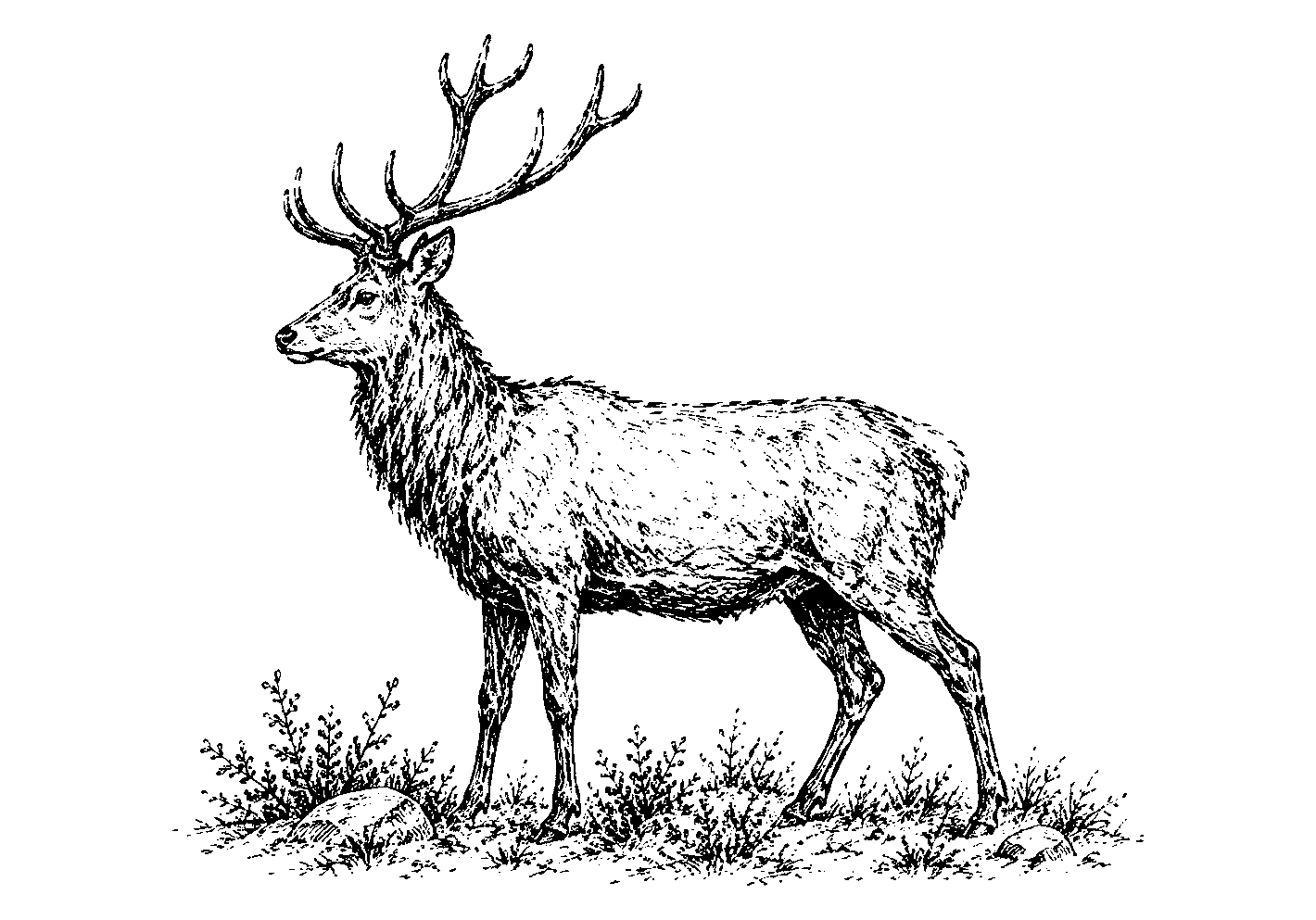
- Highest-percentage broadside aim
- Heart/lung pocket directly behind the foreleg, lower half of chest
- Quartering away
- Aim through the vitals toward the opposite front shoulder
- Shots to avoid
- Head, neck and straight-away rear shots—tiny margins and high wounding risk
- Core ethical rule
- If unsure of angle, backstop or rest—never press the trigger
On this page
Ethical shot placement is a hunter's first obligation. Every trigger press should target a rapid, decisive drop in blood pressure through the heart, lungs and major arteries—with clean margin away from the stomach, spine and legs.
- Heart & lower lungs (prime broadside aim): Straight up the back of the foreleg one-third into the chest—fast bleed-out, forgiving margin and clean venison.
- Centre double-lung zone: Largest vital target on big game; produces quick collapse and bright frothy blood sign.
- High shoulder / spine margin: Can drop game on the spot, yet sits dangerously close to the non-vital void below the spine where a grazed animal gets back up and vanishes.
- Head / neck (avoid): Tiny, constantly moving target—do not take on healthy standing game.
- Paunch / gut (never aim here): Causes slow suffering, difficult tracking and contaminated meat.
Reading animal angles in three dimensions
| Animal angle | Assessment | Correct 3D aim point |
|---|---|---|
| Clean broadside (90°) | Ideal | Up the foreleg 1/3–1/2 chest depth (zones 1–2) |
| Quartering away (45–75°) | Strong with bonded/copper bullet | Behind near ribs angled toward opposite shoulder |
| Quartering toward (45–75°) | Demanding—close range & tough bullet only | Point of near shoulder toward far ribs (heavier meat damage) |
| Straight-on or straight-away | Pass the shot | High risk of deflection or gut penetration |
| Running fast / brush in front | Pass the shot | Even pencil-thin twigs can deflect or blow up hunting bullets |
Reading shot reactions and immediate follow-up
- Kicking high and sprinting 30–80 m: Classic heart/lung hit—listen carefully for the crash seconds later.
- Hunched back and slow walk: Classic gut-shot reaction—wait at least 2–3 hours before tracking so you do not bump the wounded animal out of its first bed.
- Instant drop followed by struggling up: High spine graze—chamber immediately and take a safe follow-up shot if presented.
Study shot-site inspection and bullet construction to pair anatomy with the right load.
Relevant Species

Moose
Sep – Dec (Nordics & North America; varies by region and quota)

Red Deer
Aug – Feb in Europe (Mar – Apr rut in NZ; varies by country and sex)

Roe Deer
Apr – Oct (bucks); Sep – Jan/Mar (does; varies by country)

Wild Reindeer
20 Aug – 30 Sep (Norway); Aug – Sep (Iceland & North America)

Wild Boar
Year-round or autumn – winter (strict protection for nursing sows; varies by country)
White-tailed Deer
Sep – Jan/Feb (Finland: 1 Sep – 15 Feb; North America varies by state/province)
Related Hunting Methods
Driven Hunt
Complete guide to driven big-game hunts (Drückjagd, battue, Nordic drives): 30-degree safety sectors, blaze orange, LPVO/red-dot optics and shooting moving game.
Stand Hunting
Complete guide to stand and high-seat hunting: siting along game trails and funnels, wind discipline, safe downward backstops, cold-weather layering and patience.
Stalking
Field guide to stalking (still-hunting): mastering wind and thermals, silent pace, glassing before stepping, shooting sticks and calm shot selection worldwide.
Frequently asked questions
Where is the safest point of aim on a broadside deer, moose or elk?
Follow the back edge of the front leg straight up one-third to halfway into the chest cavity. This puts your bullet through both lungs and the major vessels above the heart, giving generous margin in every direction with minimal shoulder meat loss.
Why should hunters avoid head and neck shots on healthy game?
The brain and cervical spine are tiny targets that constantly move as the animal feeds or listens. A 3–5 cm (1–2 in) miss shatters a jaw or windpipe, creating a slow, non-fatal wound that rarely leaves a recoverable blood trail.
How do I aim on a quartering-away animal?
Visualise the vitals in three dimensions, not as a flat target. Place the crosshair slightly behind the near shoulder so the bullet travels diagonally through both lungs toward the far-side front leg. Pass steep angles where the bullet must cross the stomach first.
How does shot placement on wild boar and African plains game differ from deer?
On both wild boar and African antelope, the heart and lungs sit farther forward and lower directly above the foreleg, while the gut reaches closer to the front ribs. Aim vertically up the front leg rather than far behind the shoulder.
Plan your hunt with Hunta
Share live maps, stands, wind direction and quotas for free with your hunting team, or discover available hunting grounds in Norway.