Hill & Mountain Stalking
Mountain and alpine hunting
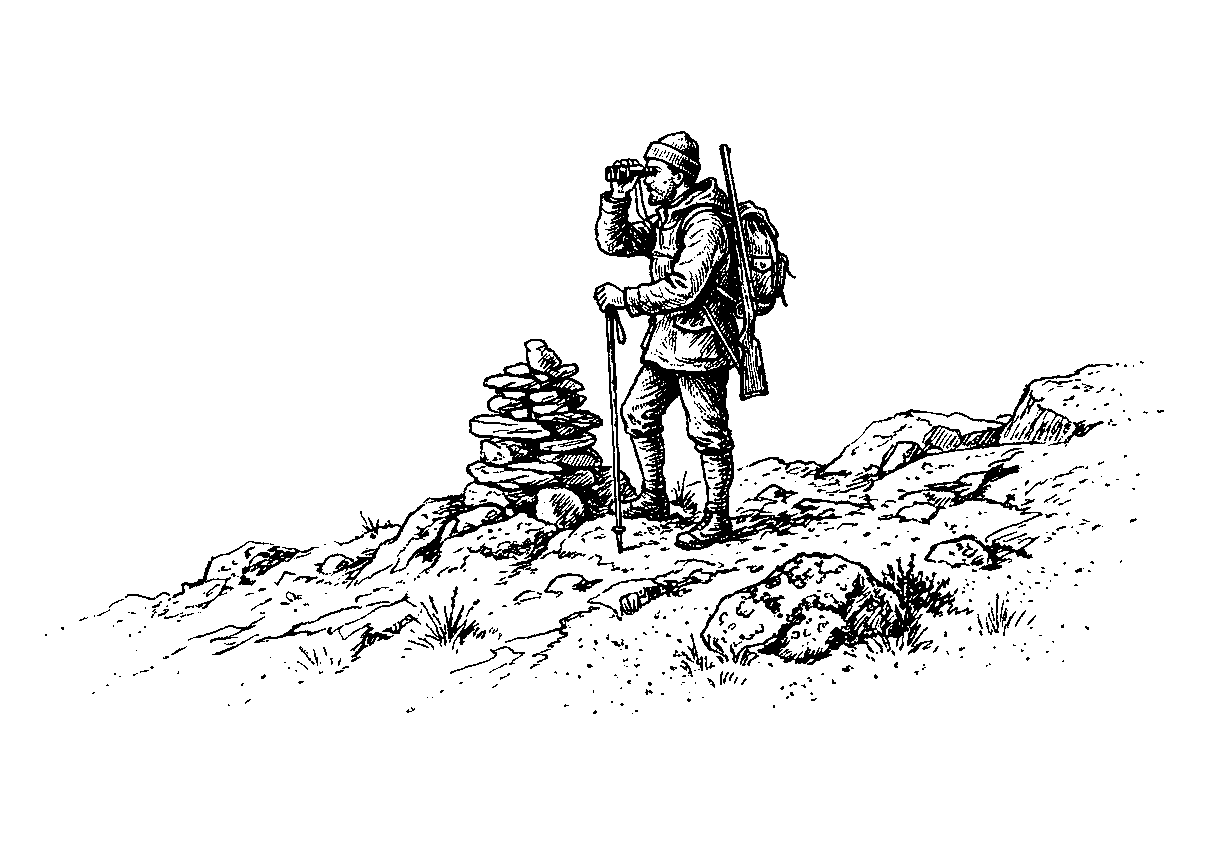
- Core skill
- Let your optics walk—spend 80 % of daylight glassing methodically from vantage points
- Mountain thermals
- Air rises up slopes as sun warms the ground and sinks down valleys at dusk
- Steep shot physics
- Steep uphill and downhill shots both hit high—use an angle-compensating laser
- Non-negotiable kit
- Stiff mountain boots, windproof shell, insulation layer, offline maps & PLB
On this page
Whether stalking wild reindeer on Norway's Hardangervidda, red stags in the Scottish Highlands, chamois in Tyrol, elk in the Rockies or tahr in New Zealand's Southern Alps, mountain hunting rewards the same fundamentals: fitness, disciplined glassing, weather judgement and rock-solid field shooting.
Glass methodically before climbing
Inexperienced mountain hunters hike too fast and glass too little. Seasoned hunters climb to a sheltered vantage point at first light and grid every basin slowly through quality binoculars.
- Glass close first, then far: Check nearby benches and saddles before scanning two kilometres away.
- Look for parts, not silhouettes: Flicking ears, horn tips, horizontal backs or colour contrast in shade betray bedded game.
- Stabilise your glass: Bracing binoculars on a light tripod or rucksack multiplies spotting success.
Alpine kit priorities
| Category | Mountain-proven choice | Avoid |
|---|---|---|
| Footwear | Stiff, ankle-supporting mountain boots with Vibram lug soles | Soft lowland boots that roll on talus and scree |
| Layering | Merino base, packable down/synthetic puffy for glassing, storm shell | Heavy cotton or bulky insulated suits while climbing |
| Rifle & glass | Accurate 3.3–4.0 kg rifle (6.5 / .270 / .308 / 7mm), angle rangefinder | Unwieldy 6 kg bench rigs |
| Safety | Offline topo maps + compass, bivy sack, headlamp, first aid, PLB/inReach | Relying on mobile signal in mountain basins |
Practise prone-over-pack and seated shooting-stick positions in crosswind, and dial in your ballistics with zeroing and shooting.
Relevant Species

Wild Reindeer
Not native to the UK; Norway: 20 Aug – 30 Sep

Willow Ptarmigan and Rock Ptarmigan
Red grouse & ptarmigan: 12 Aug – 10 Dec (Great Britain); Nordics: 25 Aug – Feb/Mar

Chamois
Not native to the UK; Alps & Pyrenees: Aug – Dec; New Zealand: year-round
Red Deer
Scotland: stags all year, hinds 21 Oct – 15 Feb; Eng/Wales: stags 1 Aug – 30 Apr, hinds 1 Nov – 31 Mar
Related Types of Shooting
Stalking
Field guide to stalking (still-hunting): mastering wind and thermals, silent pace, glassing before stepping, shooting sticks and calm shot selection worldwide.
Wild Reindeer Stalking
Guide to wild reindeer hunting in Norway's high mountains (Hardangervidda, Rondane, Snøhetta, Setesdal): permits, judging herd shots, mountain wind and packing meat out.
Frequently asked questions
How do mountain wind thermals affect stalking?
Alongside prevailing wind, daytime sun heats valley slopes and pulls air uphill; once shadows fall or dusk arrives, cooling air sinks steadily downhill. Always plan approaches above rising morning thermals or below sinking evening thermals.
What optics matter most for mountain hunting?
High-grade 10x42 binoculars (ideally braced on a lightweight tripod or paired with an angle-compensating rangefinder) find far more game than an oversized riflescope. A compact spotting scope saves brutal climbs by letting you judge trophies or herd structure from afar.
What is the sweet-spot rifle weight for alpine hunting?
A complete scoped, suppressed mountain rifle weighing 3.3–4.0 kg (7.3–8.8 lb) balances all-day climbing comfort with enough steadiness for clean wind-blown shots.
Plan your outing with Hunta
Share live maps, pegs, wind direction and bag limits for free with your syndicate, or discover available shooting ground in Norway.